Finding a Piano's Serial Number and Age
For a valuation, a sale, or just out of curiosity: the year a piano or grand piano was built can almost always be worked out from its serial number. This guide shows you where to find it and how to read it.
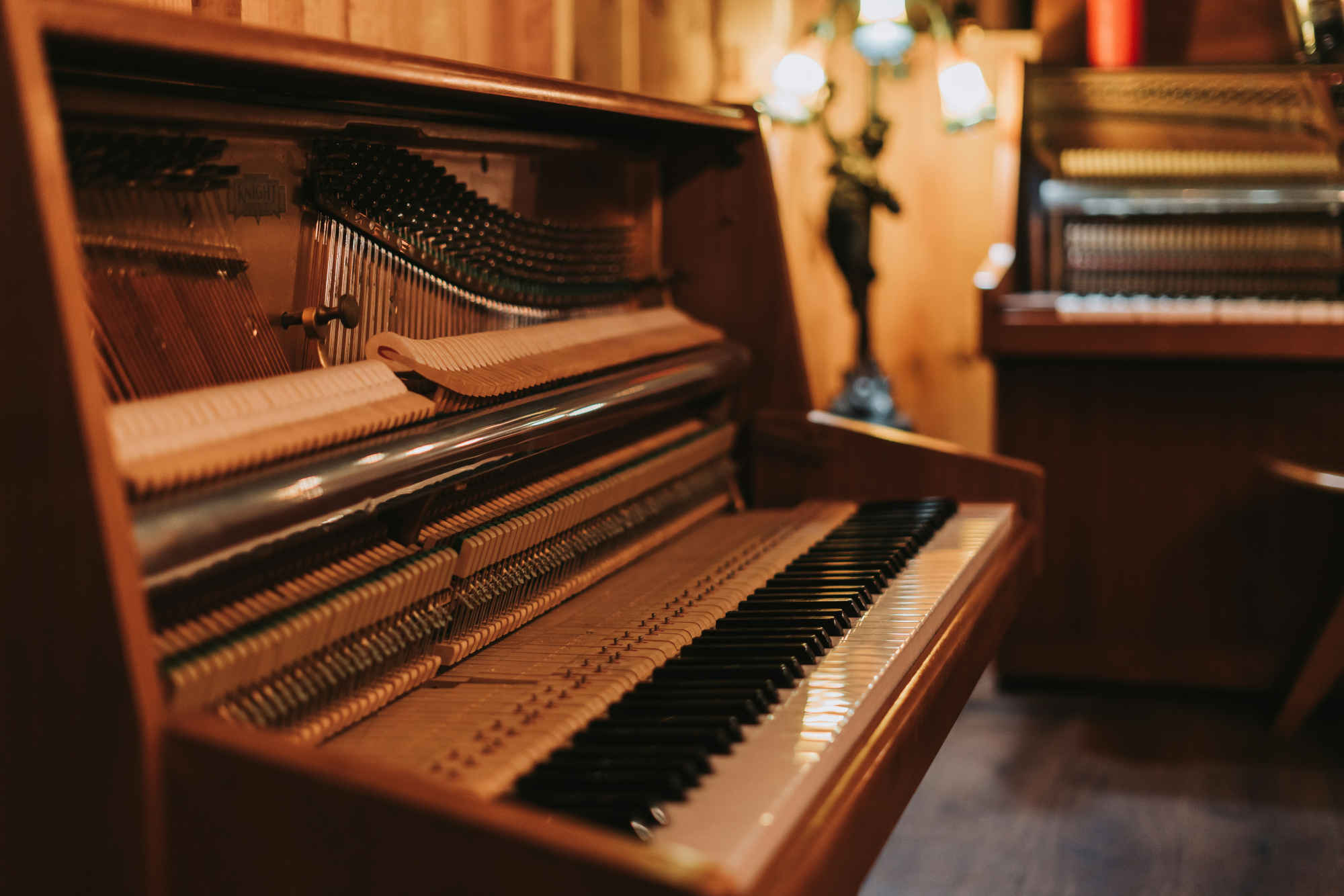
Where Is the Serial Number?
The serial number is usually stamped into the cast iron plate, in different spots depending on the type of instrument:
- Upright pianos: Open the lid above the keyboard and look at the top edge of the cast iron plate, just above the strings. The number is sometimes also on the back panel or inside below the keyboard, visible once the upper fallboard is removed.
- Grand pianos: With the lid open, look on the cast iron plate, usually near the front close to the keyboard, or on the pinblock, visible if you look across the strings toward the keyboard.
- Digital pianos: Here the manufacture date matters more than a serial number, usually found on a sticker on the underside or back of the unit.
Determining the Build Year from the Serial Number
Every manufacturer numbers instruments according to its own system, there's no single table that covers every brand:
- Steinway & Sons: Steinway has kept a continuous serial numbering system since its founding in 1853, tracked separately for Hamburg and New York instruments, also researchable through reference tables.
- German and Austrian heritage brands: For brands like Bechstein, Blüthner, Schimmel or Bösendorfer, piano builder associations or the manufacturer itself can often help, since some company archives have gaps around the war and postwar years.
- Unknown or renamed brands: For no-name instruments or brands that changed hands multiple times, the build year can often only be roughly estimated from construction style, action and materials used.
Determining Build Year and Value in Three Steps
- Locate the serial number: Open the lid and look for the stamped number on the cast iron plate, as described above for your type of instrument.
- Determine the build year using a manufacturer table: Compare the serial number against your manufacturer's reference table, or ask a local piano technician or dealer for help if needed.
- Use the build year for valuation: Combine build year, brand and condition, for example using a piano builders' association valuation table, to arrive at a realistic benchmark price.
Questions and Answers
What if I can't find a serial number?
First check every spot mentioned in this guide carefully, the number is often just dirty or hidden behind a panel. If there really is no number, a piano technician can roughly estimate the build year from construction style and materials.
Does the build year say anything about a piano's quality?
Not directly. A well-maintained 50-year-old brand-name piano can outperform a much younger entry-level model in tone and feel. The build year mostly matters for assessing wear parts and comparing against similar instruments.
Where can I find manufacturers' official serial number tables?
Many manufacturers and dealers provide tables, and a piano technician near you usually has access to current reference material for all common brands.
Once you know the brand, model and build year, you have the basis for a realistic price estimate.
Use the guide to piano valuation to position your price, or go straight to creating a free listing on PianoHub.