Tuning Your Own Piano: What's Realistically Possible
More and more piano owners wonder whether they can handle tuning themselves, especially now that apps exist to help with it. The honest answer: small touch-ups are doable with the right tools, while a complete professional-level retuning takes practice and time.
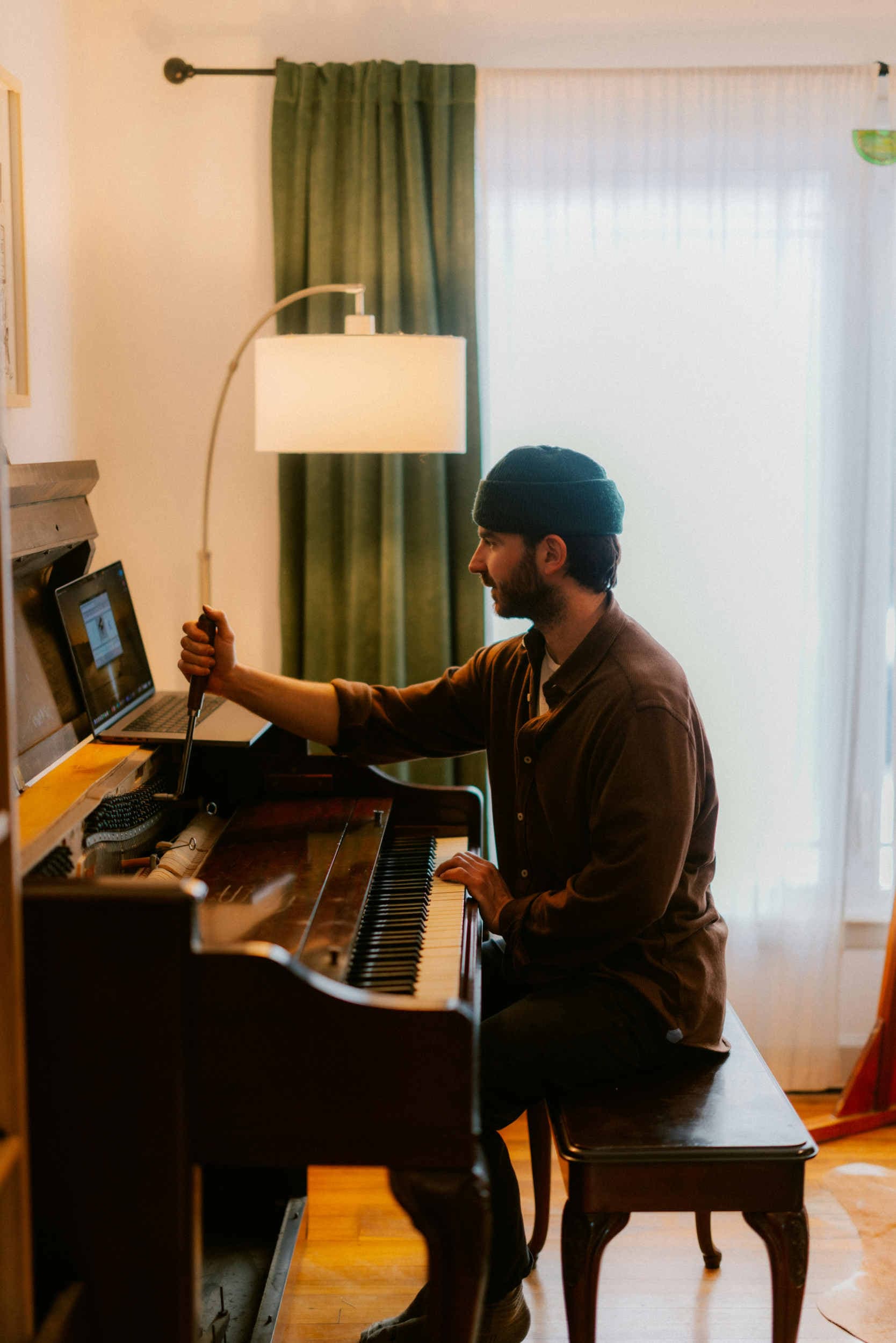
What's realistically possible?
Piano technicians who discuss this in specialist forums agree on one point: the best entry point is small touch-ups, not a full tuning.
- Touching up unison strings: Most notes in the middle and upper range of a piano are produced by two or three strings at once. When they drift slightly apart, you hear a beating in the sound. Nudging individual strings back into line is widely seen among piano technicians as the most realistic starting point for beginners.
- A complete retuning: Tuning an entire piano cleanly and stably across all 88 keys is considerably harder, even with app support. Some people manage it fairly quickly, others need several attempts, it depends heavily on your ear and your practice with the tuning hammer.
- What professionals use: Piano tuners typically work with professional software like TuneLab or Verituner. For a casual start, these programs are usually overkill, though these days there are also excellent modern alternatives like Pianoscope and Pianometer that professionals use as well.
Requirements & risks
Before you pick up a tuning hammer, it's worth being honest about what you actually need and what can go wrong.
- Tools: A suitable tuning hammer (also called a tuning lever), plus mutes or felt strips to silence individual strings within a unison while you tune another. Affordable beginner sets cost far less than a single professional tuning.
- A quiet room: Tuning apps analyze the piano through the microphone. Background noise, conversation, or a TV running in the background throws off the measurement and quickly leads to wrong results.
- Risk to pins and strings: A wrongly positioned tuning hammer or too much force can loosen a tuning pin or, in the worst case, snap a string. If you're holding a tuning hammer for the first time, move carefully in small steps rather than cranking a string straight to its target pitch.
- Patience: Your first tuning will rarely be as stable as one done by an experienced piano tuner, and that's normal. How quickly that improves depends heavily on practice, some people need only a few attempts, others considerably more.
Apps for tuning your own piano
Unlike simple frequency tuners, the apps below measure your specific instrument's inharmonicity and calculate an individual tuning curve from it, similar to what an experienced piano tuner does by ear. Plain pitch-detection apps without this feature are widely considered not very useful by professionals.
- Pianometer (by Anthony Willey / Willey Piano LLC): Available cross-platform for iOS and Android, with a free trial and tiered purchase options for hobbyists and professionals. More at pianometer.com.
- Pianoscope (by Frank Illenberger): iOS only, with simultaneous analysis of all 88 keys and over 80 built-in temperaments. More at pianoscope.app.
- What they have in common: Neither app replaces practice or a trained ear, but both make the technically hardest part easier: precisely detecting how far a string is from its target pitch.
How to get started
A few recommendations for your first attempt:
- Practice on a piano that doesn't matter much: An old practice piano or an inexpensive used instrument is a better first test case than the good piano in your living room.
- Start small: Begin by touching up individual unison strings instead of aiming to tune the whole piano right away, that way you build a feel for the tuning hammer without risking the entire tuning.
- Know your limits: For very old, badly out-of-tune, or valuable instruments, or if a pin feels noticeably stuck, a professional is worth more than a risky attempt on your own.
Frequently asked questions
Is the free version of a tuning app enough?
For a first try and simple checks, yes. For the full feature set, like an individually calculated tuning curve across the whole piano, usually not. The paid tiers of both apps featured here still cost far less than a single professional tuning.
What do I do if I make a mistake while tuning?
Small deviations can usually be corrected by carefully retuning the affected string. If a pin has become noticeably loose, or worse, a string has snapped, only a piano tuner or technician can help from there.
Can I really tune as well as a professional with an app?
The app handles the measuring, the actual tuning with the tuning hammer is still manual work. With practice you'll get closer to a good result, but it won't fully replace the years of ear training and touch an experienced piano tuner has.
Small touch-ups between two professional tunings are doable with some practice and the right apps. For a complete, lastingly stable tuning, an experienced piano tuner is still worth it, especially for badly out-of-tune or valuable instruments.
If you'd like to compare notes with other self-tuners, forum communities like pianoworld.com have plenty of first-hand experiences and discussions on the topic.